

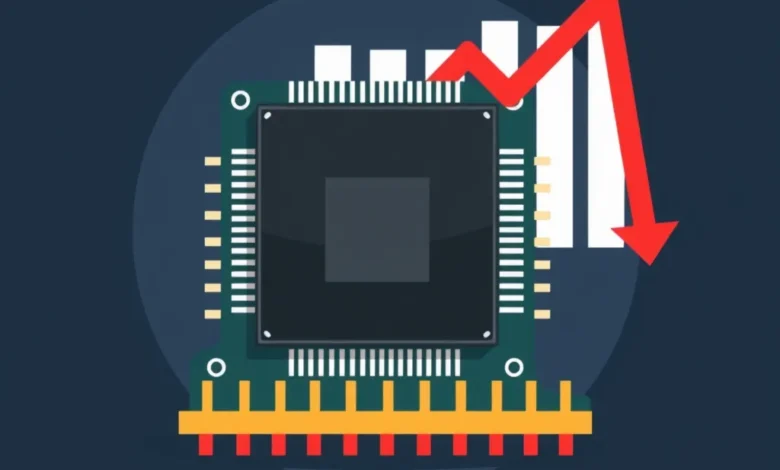
Nvidia’s board met late on Wednesday to decide the future of Jensen Huang, its founder and chief executive, after the Wall Street Journal reported that directors were preparing to oust him. The report followed a New York Times account that Huang had an extramarital relationship with Kimberly Powell, Nvidia’s vice-president of healthcare. Nvidia shares fell about 8% in after-hours trading on Wednesday as investors weighed a sudden change at the top of the world’s most valuable chipmaker.
The crisis has moved fast. On Sunday, Huang told staff he had been unfaithful to his wife. By Wednesday evening, two separate reports had put his job in question and wiped billions from Nvidia’s market value. The board has said nothing publicly about its decision, and neither Huang nor Powell has confirmed the latest reported relationship.
Nvidia Leadership Crisis — Quick Reference Summary
| Detail | What is known |
|---|---|
| Company | Nvidia, the world’s most valuable chipmaker and dominant supplier of AI processors |
| Chief executive | Jensen Huang, 63, founder and largest shareholder with about 3.6% of the company |
| Board meeting | Late Wednesday 11 November 2026, to decide Huang’s future |
| Reports behind the move | New York Times: reported relationship with Kimberly Powell; Wall Street Journal: board preparing to oust Huang |
| Share reaction | About 8% fall in after-hours trading on Wednesday 11 November, after a 2.87% rise in the regular session |
| Next milestone | Nvidia third-quarter results due Tuesday 17 November 2026 |
What the New York Times Reported About Kimberly Powell
The New York Times reported on Wednesday that Jensen Huang had an extramarital relationship with Kimberly Powell, citing five people who worked at Nvidia. Powell, 48, is the company’s vice-president of healthcare and reports directly to Huang. The newspaper said both executives are married to other people.
Two sources told the Times that Huang and Powell were filmed behaving affectionately at a hotel in San Jose during Nvidia’s GPU Technology Conference in March. The newspaper said it had not seen the footage itself. Neither Huang nor Powell has publicly confirmed the reported relationship, and Nvidia declined to comment.
Powell is a long-serving executive rather than a public figure. She joined Nvidia in 2008 to establish its graphics processors as the platform for medical imaging instruments, and became vice-president of healthcare in 2017. Her work covers medical imaging, life sciences, drug discovery and healthcare analytics.
The report landed as a second, separate personal-conduct story about Huang in less than a week. The only relationship he has admitted is the one connected to the espionage reporting, which is described below. For now, the Powell allegations remain unconfirmed reporting, and no formal process has tested them.
Why Nvidia’s Board Is Now Deciding Huang’s Future
The Wall Street Journal reported at about 5:30pm ET on Wednesday that Nvidia’s board was preparing to oust Jensen Huang after he had two extramarital affairs, including one with a suspected Chinese spy and another with an employee. People familiar with the matter told the Journal the board was planning to meet as soon as Wednesday to determine his future. Reuters, citing a source familiar with the matter, said the board met late on Wednesday. Reuters said it could not immediately verify the Journal’s report.
The board had already opened an independent investigation into whether Huang was targeted by a foreign intelligence operation. On Sunday 8 November, Huang acknowledged in a message to staff that he had been unfaithful to his wife, apologising for violating his family’s and his employees’ trust.
Nvidia’s published code of conduct does not explicitly ban relationships with subordinates or suppliers, but says personal relationships can present a potential conflict of interest. The company’s latest proxy statement warns that it is “highly dependent on the services of our longstanding executive team” and that a failure to ensure effective succession planning could hinder its strategy. Huang has about 60 direct reports and has said he does not believe in succession planning.
How Markets Reacted to the Oust Report
Nvidia shares rose about 3% in regular trading on Wednesday, closing up 2.87% at $173.73, before dropping about 8% after the market close. The slide weighed on US equity futures, with S&P 500 e-mini futures down 0.4% and Nasdaq 100 futures about 0.7% lower. The FTSE 100 had already fallen sharply last week as an AI sell-off rattled global markets, and the latest Nvidia news extended the pressure on chip stocks.
Rival chipmakers moved in different directions after hours. Advanced Micro Devices rose about 4% and Broadcom gained about 2.8%, while Intel slipped 2.7% and CoreWeave fell about 5%. The chipmaker has lost more than $365 billion in market value since the affair revelations, according to the Journal. Bettors on Polymarket put 77% odds on Huang leaving his position by resignation or removal by the end of the year, with similar odds on Kalshi.
Analysts quoted by Reuters doubted the board would remove Huang at once without a known replacement. One asset manager said he believed the board would not oust Huang until it had “an all-star, a known entity in the tech sector” to replace him.
The Alice Huang Investigation That Started the Crisis
The first affair at the centre of the crisis involves Alice Huang, a former senior executive at Megaspeed, a Singapore-based data centre company. Nvidia launched an independent probe after Huang admitted the affair amid claims Alice Huang was a suspected Chinese spy. US officials believe China’s intelligence services recruited her as an asset because of her access to the chip-designer chief.
Alice Huang was detained by Singapore authorities in the summer of 2025 and prevented from leaving the country. The United States and Singapore are scrutinising Megaspeed over allegations that it potentially transshipped billions of dollars in export-restricted Nvidia artificial-intelligence chips to China. China’s foreign ministry has called the espionage claims “groundless speculation” and “slander and smearing”.
Three House committee chairmen wrote to Huang on Monday, saying the reports raised “significant national-security concerns” about China’s access to sensitive US technology. Huang has been called to testify before Congress about what he knew of Megaspeed’s efforts to acquire Nvidia chips. The board has said it has “no reason to believe that either national security or Nvidia secrets were compromised”.
Who Could Lead Nvidia If Huang Goes
Nvidia has no clear succession plan, so any sudden departure would leave investors guessing about who takes over. Reuters named Ian Buck, an architect of the CUDA software system, and chief financial officer Colette Kress among the possible contenders to become interim chief executive.
That uncertainty is part of why the market reaction was so sharp. Huang founded the company, built it into the dominant supplier of AI processors, and is its largest individual shareholder. A board that removes him would need a credible successor ready at once, and none has been publicly identified.
What Happens Next for Nvidia
No decision from the board had been announced by Thursday morning. Investors will watch Thursday’s regular trading session for whether the after-hours fall deepens, and whether the board issues any statement on Huang’s future. Nvidia is due to report third-quarter results on Tuesday 17 November, a date that now carries far more weight than a routine earnings release.
The episode has already become a test of the global AI boom. Nvidia’s chips sit at the centre of the industry, and its leadership crisis has raised questions about governance, succession and national security at the same time. Whatever the board decides, the next few days will shape how investors value the world’s most important chipmaker.
Frequently Asked Questions
Q: Is Jensen Huang being fired from Nvidia? A: Not confirmed. The Wall Street Journal reported the board is preparing to oust him and met late on Wednesday, but no decision has been announced and Reuters said it could not immediately verify the report.
Q: Who is Kimberly Powell? A: Powell, 48, is Nvidia’s vice-president of healthcare, a role she has held since 2017 after joining the company in 2008. The New York Times named her on 11 November as the executive Huang allegedly had a relationship with; the reported relationship is unconfirmed.
Q: What did Jensen Huang admit? A: On Sunday 8 November, Huang told staff in a message that he had been unfaithful to his wife and apologised for violating his family’s and employees’ trust. He did not name Powell in that message.
Q: How far have Nvidia shares fallen? A: Shares fell about 8% in after-hours trading on Wednesday 11 November, after closing the regular session up 2.87% at $173.73. The company has lost more than $365 billion in market value since the affair revelations, according to the Wall Street Journal.
Q: When does Nvidia report results? A: Nvidia is due to report third-quarter results on Tuesday 17 November 2026.





3 Comments